In short. A partita IVA for foreigners, Italy’s VAT number for self-employed work, is opened in the same way as for Italians: you file a start-of-activity declaration (form AA9/12 for individuals) with the Agenzia delle Entrate within 30 days of starting the activity. You need a codice fiscale and, if you are a non-EU citizen, a residence permit that allows self-employment. If you qualify, you can choose the forfettario regime, with a 15% substitute tax (5% for the first five years under certain conditions).
The partita IVA is what allows non-Italian freelancers, consultants and small entrepreneurs to invoice in Italy. For tax purposes the procedure is the same for everyone. The differences lie in the documents and, for non-EU citizens, in the residence permit, which must allow self-employment. This guide covers the requirements, the steps, your obligations after opening and the most common mistakes.
Reviewed 18 October 2026. Tax rules change often: before choosing a regime or issuing your first invoice, check the latest instructions of the Agenzia delle Entrate and have your case reviewed by a tax professional.
What is a partita IVA for foreigners, and when do you need one?
A partita IVA is the 11-digit number the Agenzia delle Entrate uses to identify anyone who habitually carries on a business, art or profession. Article 35 of Presidential Decree 633/1972 requires the start-of-activity declaration to be filed within 30 days of starting the activity.
You need one, for example, if you are a freelancer, consultant, translator, graphic designer, developer, craftsperson or shopkeeper and want to invoice in Italy. Genuinely occasional services follow different rules: if in doubt, ask a professional before you decide.
Can a foreigner open a partita IVA in Italy?
Yes, but it depends on your citizenship and your residence status.
- EU and EEA citizens: you can open a partita IVA in the same way as Italian citizens. The residence rules for EU citizens still apply, for example registering with the municipal registry after the first three months.
- Non-EU citizens: the partita IVA is a tax formality and does not replace the residence permit. Before opening one, check that your permit allows self-employment. Some permits do, for example a self-employment permit or a permit for family reasons; others have to be converted first. Our guide to which residence permits allow work and which can be converted sets this out.
- Digital nomads: the visa is designed for highly qualified remote work. To see how tax and the partita IVA work in practice, read our guide to digital nomad taxes and tax residency in Italy.
If you do not yet live in Italy, the position may be different: Article 35-ter of Presidential Decree 633/1972 governs the identification of non-resident persons, including through a fiscal representative. This is a case to review with a professional.
What do you need before opening a partita IVA?
Get these elements ready before you fill in the form:
- A codice fiscale. The Agenzia delle Entrate issues it free of charge: if you do not have one, read our guide to the Italian tax code for foreigners.
- A valid identity document and, if you are a non-EU citizen, a residence permit that allows the activity you plan to carry out.
- An address to give as your fiscal domicile: normally this is in Italy.
- A description of the activity and its ATECO code, the official classification that identifies the type of activity.
- Your chosen tax regime: forfettario, if you qualify, or the ordinary regime.
- A way to file the declaration: online with your digital credentials, through an authorised intermediary, at an office or by registered post.
How do you open a partita IVA, step by step?
- Choose the activity and the ATECO code. The code describes what you do and, under the forfettario regime, determines the profitability coefficient used to calculate your taxable income. Choosing it badly can change your taxes and contributions.
- Choose the tax regime. Compare the forfettario and ordinary regimes. Our guide to the forfettario regime for foreigners sets out the requirements and limits.
- Fill in form AA9/12. You give your personal details, fiscal domicile, the type and object of the activity, the places where it is carried out and the regime you have chosen.
- File it within 30 days of starting the activity. You can send it electronically, yourself or through an authorised intermediary; hand it in at an Agenzia delle Entrate office; or send it by registered post with a copy of an identity document. In the last case the date of dispatch counts.
- Receive the certificate of assignment. The office issues or sends the certificate showing your VAT number, which stays the same until the activity ceases.
- Sort out the social security side. In general, self-employed people pay contributions to INPS or to the fund of their profession; for business activities, registration with the Business Register may also be needed. The tax professional will tell you what applies in your case.
- Start invoicing. Invoices are issued in electronic format through the Exchange System (Sistema di Interscambio), and you need a channel to receive your suppliers’ invoices, such as a recipient code or a PEC (certified email address).
How much does it cost to open a partita IVA?
The cost depends on what your case requires: the help of the professional who opens the partita IVA and sets up the regime, bookkeeping and annual tax returns, social security contributions and, for business activities, possible registration with the Business Register. Always ask for a written quote that says what is included and what is not.
Forfettario or ordinary regime: which should you choose?
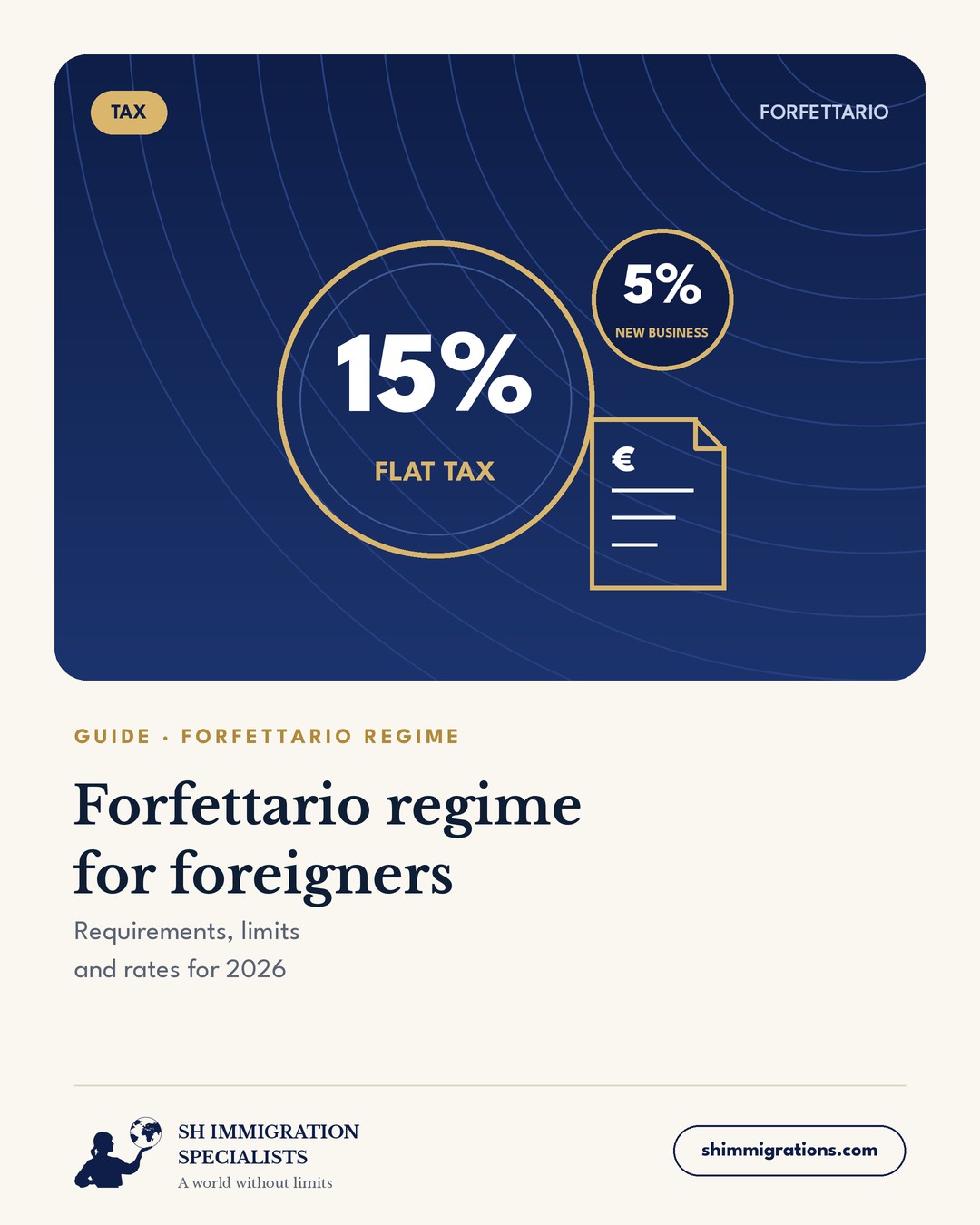
The forfettario regime is the flat tax for partita IVA holders: a 15% substitute tax, reduced to 5% for the first five years of a new activity if the legal conditions are met, revenue of up to €85,000 and invoices issued without VAT. Under the ordinary regime, income is taxed with progressive IRPEF rates and VAT applies.
The choice depends on your expenses, your clients, the type of activity and, for non-EU citizens, your tax residency: in general, the forfettario is open to people resident in Italy. Ask a professional for a simulation before you decide.
What obligations do you have after opening?
- issuing and keeping electronic invoices;
- paying taxes and contributions by the deadlines;
- filing your income tax return every year and, under the ordinary regime, the VAT filings as well;
- reporting changes (for example a new address or a different activity) and closure within 30 days, the same rule as for opening;
- keeping your residence permit valid, if you are a non-EU citizen.
What are the most common mistakes?
- opening a partita IVA with a permit that does not allow self-employment;
- choosing an ATECO code that does not fit the real activity;
- opting for the forfettario without checking residency, shareholdings in companies and employment income;
- missing the 30-day deadline for opening or for closing;
- having no channel to receive electronic invoices;
- not updating your details after a change of residence or permit.
Frequently asked questions
Can I open a partita IVA with any residence permit?
No. If you are a non-EU citizen, your permit must allow self-employment. Some permits do, while others need to be converted first. The partita IVA is a tax formality and does not replace the residence permit, so check your permit before opening one.
How soon must I open a partita IVA after I start working?
Article 35 of Presidential Decree 633/1972 requires the start-of-activity declaration within 30 days of starting the activity. The same 30-day rule applies to changes and to closing the partita IVA. If you have already started working, ask a professional how to regularise your position straight away.
Can a foreigner use the forfettario regime?
Yes, if you meet the requirements. In general, non-residents are excluded, except residents of an EU or EEA state with an adequate exchange of information who earn at least 75% of their income in Italy. A non-EU citizen must therefore be tax resident in Italy to use the forfettario.
Does a digital nomad have to open a partita IVA in Italy?
Not automatically: it depends on your tax residency, the type of activity and your clients. If you work on a self-employed basis and become tax resident in Italy, you may need a partita IVA and a tax return in Italy. Have your case checked before you relocate.
Can I open a partita IVA online?
Yes. The declaration can be filed electronically, either directly or through authorised intermediaries. Alternatives are to hand it in at an Agenzia delle Entrate office or to send it by registered post with a copy of an identity document attached.
Official sources
- Articles 35 and 35-ter of Presidential Decree 633/1972 – Agenzia delle Entrate (original Italian text)
- Partita IVA for individuals (form AA9/12): what it is – Agenzia delle Entrate (in Italian)
- How to open a partita IVA – Agenzia delle Entrate (in Italian)
- Forfettario regime: what it is – Agenzia delle Entrate (in Italian)
- The tax code for citizens – Agenzia delle Entrate (in Italian)
The text of Article 35 was consulted on 18 October 2026. For the other Agenzia delle Entrate pages, always check the current version: forms, instructions and regimes can change.
How can SH Immigration Specialists help?
We can support you through the whole journey of coming to Italy to work for yourself: checking your visa and residence permit, your codice fiscale, your residence and, with the support of tax professionals, opening the VAT number, choosing the regime and handling your obligations. Legal advice, appeals and representation before a court are provided by the lawyers of SH Immigration Specialists’ immigration law firm. The full path, step by step, is on our page VAT number and company setup for foreigners in Italy. The outcome depends on the competent authorities. For an assessment, contact us.
This content provides general information and does not constitute legal or tax advice.
Do you have a case like this? Talk to a specialist consultant
In 30 minutes a specialist consultant at SH Immigration Specialists looks at your situation and tells you what to do, which documents you need and which mistakes to avoid. Online from any country or in one of our 8 offices in Italy, also in Arabic, Hindi and Urdu.
Want us to handle it for you? See our residence permit service.
Secure online payment with Stripe. SH Immigration Specialists is not a law firm: appeals and legal advice are handled by the lawyers on the team.
Which other guides may help you?
- Forfettario regime for foreigners in Italy: 2026 requirements and limits
- Digital nomad taxes in Italy: tax residency and VAT number
- How to open an SRL in Italy as a foreigner: steps, notary and costs
- Self-employment visa and residence permit in Italy
- VAT number and company setup for foreigners in Italy: the full path